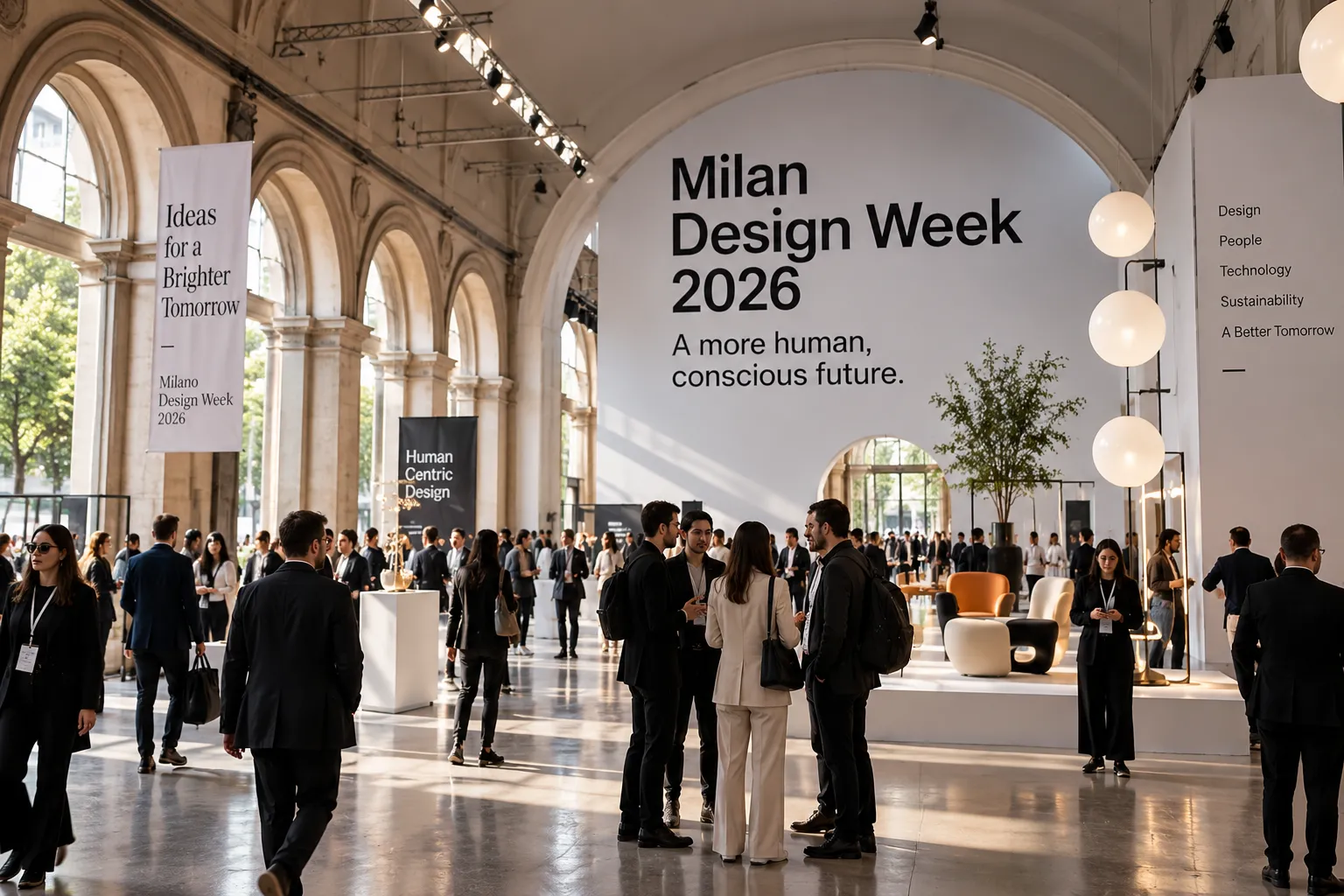
Milan Design Week 2026 has become the season's most crowded brand-marketing arena, with at least seven consumer names from outside the furniture trade — Kia, Fiat, Lotus, Lexus, Samsung, IKEA and Chiquita — building dedicated installations across the city rather than booths inside the fair. Kia will debut two new exhibitions, the Korean carmaker's press office confirmed, while Samsung unveiled a full themed pavilion titled "Design Is an Act of Love". For Milan's agencies, venues and production houses, the week is less a design showcase than a spending event: the Fuorisalone, the sprawling programme of off-site brand activations that runs alongside the Salone del Mobile furniture fair, has turned automotive, tech and even fresh-produce marketers into anchor clients. The signal for anyone selling experiential, set-build or influencer services in the city is clear — this is where non-endemic brands are choosing to plant their 2026 flags.
What happened at Milan Design Week 2026?
The roll-call is unusually broad. Kia will debut two new exhibitions at the event, according to its press office release dated 9 April. Samsung unveiled its "Design Is an Act of Love" exhibition, the company said, with a photo tour of the space published on 21 April and further imagery on 24 April. Stellantis-owned Fiat announced a "CIAO FUTURO!" presence on 23 April, per Media Stellantis. Toyota's luxury marque Lexus confirmed its participation on 10 March and detailed its exhibit on 20 April, according to Toyota's corporate site. Lotus said it was heading to Milan Design Week on 2 April, per Lotus Cars.
Beyond the car and tech contingent, IKEA's owner Ingka Group announced a "Food For Thought" concept on 4 March, and fruit brand Chiquita opened a "Miss Chiquita House" installation, reported by Fruitnet on 21 April. Design title Dezeen also flagged an installation by Dust Media on 26 April. The clustering of automotive brands in particular — four separate marques across Kia, Fiat, Lexus and Lotus — is the standout of the 2026 edition.
Why does this matter for Milan?
Milan Design Week is the commercial engine of the city's spring calendar, and the Fuorisalone activations are almost entirely a marketing spend rather than a trade one. Each of these installations requires a local production partner, a venue lease in districts such as Brera, Tortona or Isola, set fabrication, staffing and PR — money that flows into Milan's agency and events economy. When a carmaker such as Kia commits to two exhibitions rather than one, it is doubling a budget that lands with Milanese suppliers.
The pattern also tells local marketing leaders where non-endemic budgets are heading: away from conventional media and towards physical, photographable brand experiences designed to be shared. Samsung framing its stand around the idea that "Design Is an Act of Love" and Chiquita building a branded house are bids for social reach as much as trade credibility. That mirrors the wider shift toward experience-led work that many operators have tracked in the marketing trends that matter in 2026, and it rewards the city's studios that can deliver Instagram-ready builds at speed. What the sources do not disclose is the budget any brand committed, the agencies of record behind each activation, or footfall targets — figures worth pressing for before drawing conclusions on ROI.
How does Milan compare with the other cities?
No other DMK Tribe city concentrates non-endemic brand spend into a single week the way Milan does. Barcelona's Mobile World Congress pulls tech marketing, and Lisbon has Web Summit, but neither turns consumer brands loose across an entire city's neighbourhoods as the Fuorisalone does. The activation-first logic is the same one seen when fresh-produce brands go experiential elsewhere — comparable to Pink Lady opening a Madrid pop-up to reach shoppers directly, or Inditex's Oysho becoming Valencia Half Marathon partner. Milan's difference is density and the calibre of anchor clients: when Fiat, Lexus and Samsung all build in the same week, the city becomes a live benchmark for what experiential marketing looks like at scale.
For local social and content teams, the week is also a case study in distribution, echoing debates around building a high-value digital presence — the installations exist to be filmed, not just visited.
What to watch next
Milan Design Week 2026 runs through the Salone del Mobile period in April, and the immediate test is which activations convert coverage into commercial return. Watch for post-event footfall and social-reach figures from the brands themselves — none has been disclosed yet — and for whether the four-marque automotive turnout signals a repeatable annual commitment or a one-off. For Milan's agencies, the number to track is how many of these accounts are handled locally versus flown in from brand headquarters; that ratio decides how much of the spend actually stays in the city.