Uber has confirmed that Madrid will be among the first cities in Europe where autonomous vehicles can be booked through its app, according to Anabel Díaz Calderón, the company's vice president of mobility for Europe, the Middle East and Africa, speaking at the Global Trends 2026 conference organised by the American Chamber of Commerce in Spain (AmChamSpain) on 9 October, as reported by Demócrata.
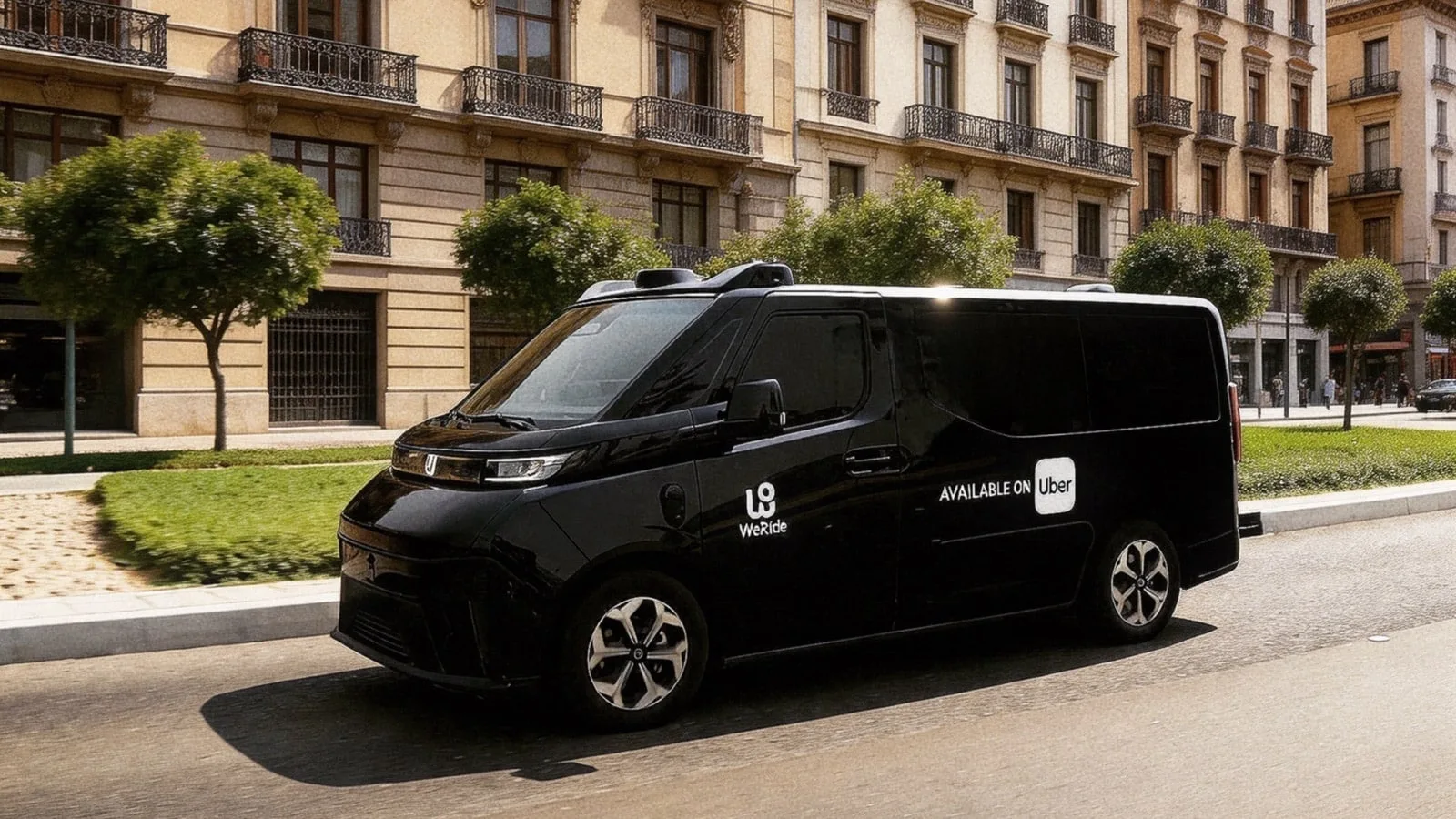
The cars run on WeRide's autonomous driving technology, with a local fleet operator, under a framework worked out with Spain's traffic authority, the DGT. According to the information released by the organisers, the vehicles are already circulating in Madrid in a testing phase.
Safety drivers first, driverless later
The rollout will be gradual: it starts with safety drivers on board and in designated areas, and the move to driverless operation will only come once the milestones agreed with the regulator are met. Autonomous trips will be part of the normal app experience, and riders will be able to accept or decline the autonomous vehicle they are assigned.
Díaz Calderón said Madrid combines regulatory leadership, cooperation between administrations and industry and a solid network of technology and operating partners. She also made clear that Uber does not expect autonomous cars to replace drivers any time soon: the two will coexist. Over the next five to ten years, she argued, the bigger change will be a shift from owning a car to accessing transport through platforms.
More than one technology provider
Rather than betting on a single autonomous driving developer, Uber wants to integrate several, with its platform acting as the bridge between them and riders, because European markets differ so much in regulation, transport systems and habits.
The plan announced in June
WeRide and Uber announced the Madrid pilot on 2 June. Day-to-day fleet operations are handled by Avomo, a Moove Cars Group company that already runs Uber fleets in Atlanta and Austin. Madrid is WeRide's 12th city worldwide and its fifth European market, and the partners plan to grow to hundreds of robotaxis and, eventually, fully driverless service across Madrid's core urban areas. The two companies already run fully driverless commercial robotaxi operations in Abu Dhabi and Dubai. Sarfraz Maredia, Uber's global head of autonomous mobility and delivery, said at the time that Madrid is poised to become a leading autonomous driving market in Europe.