Rivercell, a Paris biotech and AI company, has come out of stealth with a $25M seed round, about €22 million, to build an AI model that predicts how human cells respond to drugs and genetic changes, according to The Next Web, Sifted and Startup Rise. The round was led by HV, with HCVC, Alven and Bpifrance Digital Venture taking part.
The money will pay for the company's data platform, a bigger wet lab in Paris and the launch of its AI Virtual Cell programme. Rivercell describes the model as a world model of the cell: a simulation that predicts how a cell will change after a treatment.
Why it is generating its own data
AlphaFold could predict protein structures because it drew on decades of public data, the company argues, and no dataset of that scale exists for how cells respond to drugs over time. So Rivercell plans to produce it. It will film living cells through each experiment and then read their gene activity; the model will choose the next experiment and the lab will run it. The company is building its own instruments for this, which it calls the "GPU for the bio data center", and says the approach should cut the number of physical lab experiments needed.
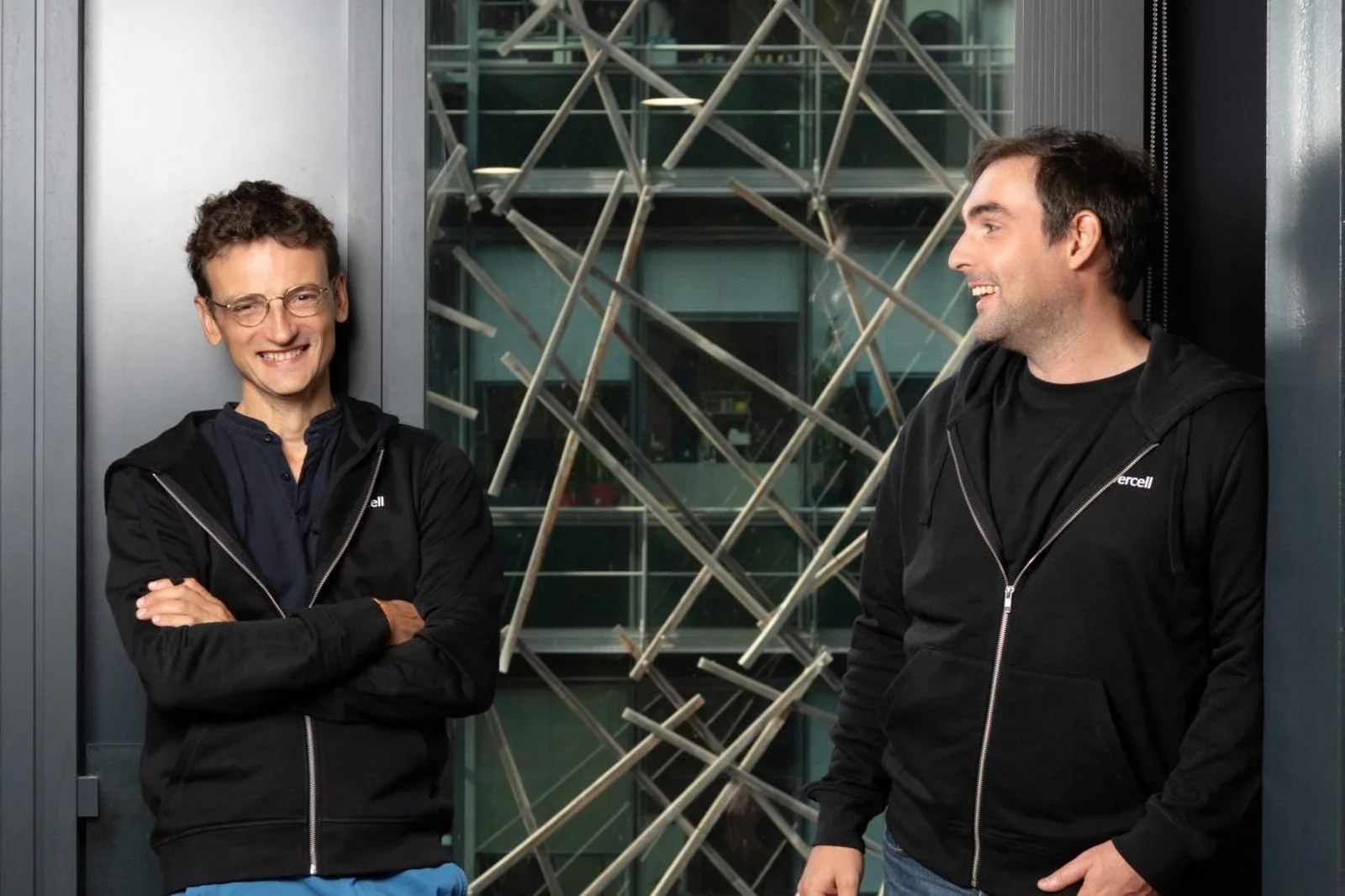
"A world model of the cell is the opportunity of the century in medicine. The missing piece is data," said Yann Fleureau, co-founder and chief executive.
The founders
Fleureau started Rivercell in summer 2025, according to The Next Web. He previously co-founded Cardiologs, the AI heart diagnostics company Philips bought in 2021. Eric Durand joined as co-founder and chief scientific officer after seven years leading oncology data science at Novartis; he then ran data science at Owkin and co-founded Bioptimus.
Charlotte Bunne of EPFL and Fabian Theis of Helmholtz Munich sit on the scientific advisory board, and the angel investors include founders and executives from Twist Bioscience, DNA Script and Agilent. Maxi Pethö-Schramm, a principal at HV, pointed to the company's footing in both the Paris AI ecosystem and Basel's pharma cluster.
A crowded race
Rivercell is not alone. London's Relation is working on a cell foundation model with GSK, and in AI drug discovery Chai Discovery raised a $400M Series C in July, while ByteDance's Anew Labs raised $290M in September. Rivercell did not give a valuation or say when it expects its first model to be ready.