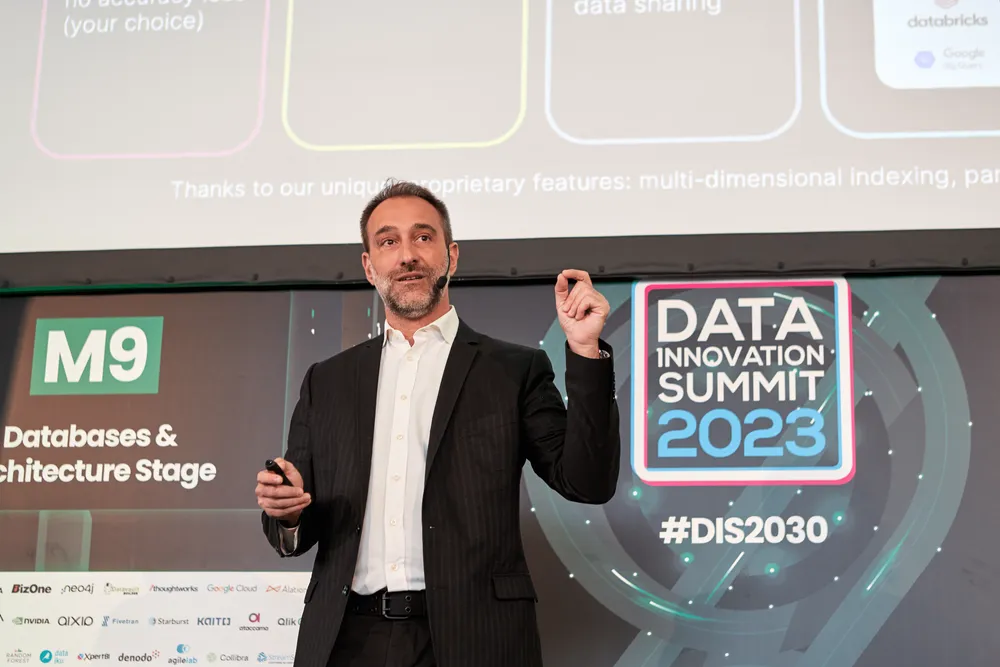
Led by May, an expert in workflow automation, the event demystified Artificial Intelligence (AI) as something exclusive to large corporations and demonstrated how small businesses can gain massive leverage through the strategic use of technology.
A New Era of Efficiency: From Rules to Context
The current industry landscape has shifted radically with the arrival of AI. Previously, automation relied on rigid "if-this-then-that" rules. Today, AI has provided machines with context, allowing them to "understand" rather than just follow instructions. During the session, May highlighted that what used to require a team of five people can now be managed by a single professional supported by the right workflows.
When to Automate (and When Not To)
One of the most debated points was the discernment of which processes deserve to be automated. According to May, the ideal candidate is any task that is repetitive, rule-based, high-volume, or error-prone. Conversely, it is not recommended to automate processes that are not yet defined, tasks with critical risks that do not allow for a human review step, or activities that only occur once a month.
The key is not the technology itself, but clarity regarding one's own process. "The real skill is seeing your own process clearly enough to draw it on a napkin," May noted during the talk.
Practical Use Cases: Content, Email, and Knowledge
The fundamental difference lies in reliability. While a manual six-step process might take 45 minutes and be prone to human error, an automated system reduces that time to just three minutes of supervision, running consistently even at 2:00 AM.
- Multi-platform Content Creation: Through a live demo using the tool n8n, May showed how to transform a single piece of content into platform-ready posts for LinkedIn, Instagram, and email automatically. The impact is significant: production time drops from 3 hours to just 30 minutes of final review, allowing a creator to scale from 2 to over 5 weekly posts without hiring additional staff.
- Email Triage: Inbox management is often a major bottleneck. May presented a system that categorizes incoming emails, searches for client history, and drafts a response based on previous interactions. This allows support teams to focus on reviewing and sending rather than drafting from scratch, improving quality and reducing burnout.
- Knowledge Management Systems (RAG): To prevent institutional knowledge from depending on a single person, the use of vector databases was proposed. By uploading documents to this system, any team member or client can perform queries and get precise answers based exclusively on the company's material, eliminating the "hallucinations" typical of generic AI.
The Community Perspective: Collective Intelligence
During the interactive Q&A session, members from both DMK Tribe and Lisbon Entrepreneurs and Creators shared their biggest operational "headaches." This collective brainstorming underscored a vital truth: automation does not seek to replace the human element. Instead, it aims to free professionals from mechanical, soul-crushing tasks so they can focus on high-value work that requires creative judgment and empathy.
The collective conclusion of the group was that automation is a "living system." It requires initial monitoring and periodic updates to stay aligned with business growth; it is not a "set it and forget it" solution, but a digital employee that needs clear instructions.
For professionals looking to scale, the path to efficiency begins with small but steady steps. The final recommendation of the workshop was to map out a single process this week, identify where the personal bottleneck lies, and build a first workflow that generates a quick win. In a world where the tools are already within everyone's reach without needing to know how to code, the only real limit is our ability to analyze and redesign our own way of working.
May Zhan
AI and Automations | I build workflows in n8n that replace manual work for small teams and founders
May builds AI‑powered automations that replace manual work for founders and small teams. She specializes in n8n, and also works with Make.com and Zapier, designing reliable workflows that free people to focus on what actually matters.
Coming from high‑pressure industries, she developed a strong instinct for efficiency. After watching talented professionals spend hours on tasks that could be automated in an afternoon, she realized that helping people work smarter wasn’t just a skill, it was the work she wanted to do.
She has built automations for customer support, AI‑assisted content pipelines, scraping and research, news monitoring, and job‑search tools. She has also led workshops for non‑technical teams, including sessions with the Lisbon Project and the European Union Drugs Agency.
This piece was first published in DMK Tribe Magazine, issue 19, written by the DMK Tribe community after the workshop it reports on.