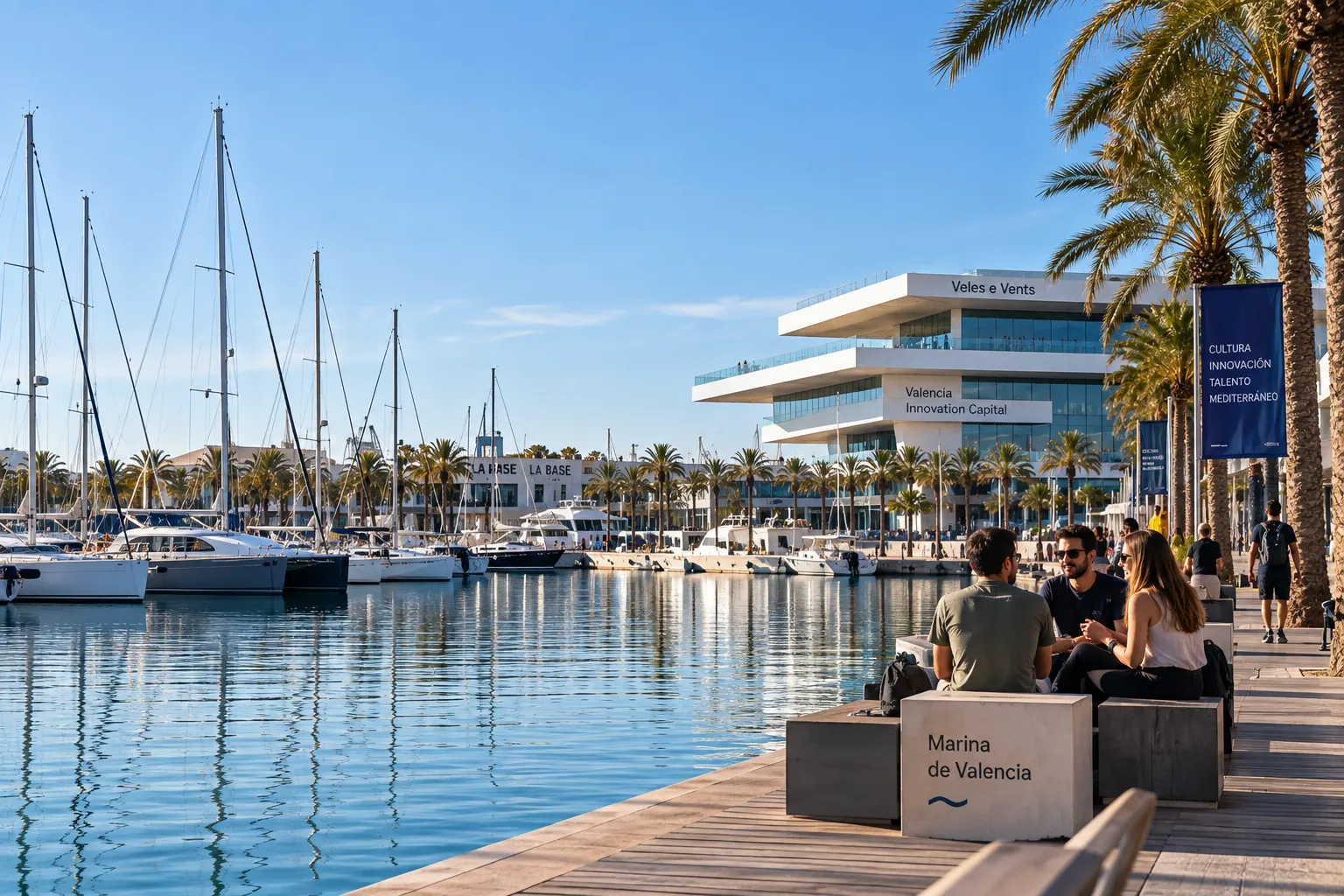
Valencia has opened the call for the eighth edition of the VDS international startup competition, the contest run alongside the city's flagship technology summit, according to Tech.eu. The announcement, dated 2 April 2025, comes almost a year after the same organiser opened registration for the seventh edition on 13 May 2024, underlining how quickly the Valencia Digital Summit franchise has become an annual fixture on the founder calendar.
For anyone building a company in Valencia, the competition is one of the few local moments each year that pulls international investors, corporate scouts and press into the city at the same time. The VDS startup competition invites early-stage teams from around the world to pitch for visibility, and it sits at the centre of a wider event that has grown alongside Valencia's ambition to be counted next to Barcelona and Madrid as a Spanish tech hub.
What happened in Valencia this time?
The core fact is straightforward: the organisers behind VDS have opened the call for applications to the eighth international startup competition, per Tech.eu's report of 2 April 2025. It is the direct successor to the seventh global edition, whose registration opened on 13 May 2024, also reported by Tech.eu.
Beyond the edition numbers and the two opening dates, the source material is thin, and it is worth being explicit about what is not yet confirmed in the reporting available. The published headlines do not carry the 2025 prize structure, the number of applicants expected, the closing date for entries, or the summit dates themselves. Those figures matter to any founder deciding whether to apply, and they should be checked against the official Startup Valencia channels before committing time to an application.
What is verifiable is the cadence. An eighth edition following a seventh a year earlier tells you this is a mature, repeatable programme rather than a one-off. For a founder, that consistency is the point: it means the competition is a planning fixture, not a gamble on whether the event will run again.
Why does this matter for Valencia's founders?
Valencia's tech scene has spent the past few years trying to convert its lifestyle appeal into hard commercial gravity. Events like the VDS competition are the mechanism: they give local startups a stage without the cost of travelling to Lisbon or Madrid to be seen. When international investors land in the city for the summit, the companies with a competition slot are the ones in the room.
The timing also lands as Spanish retail and consumer names keep adding Valencia addresses, a sign the city is being taken seriously as a commercial base rather than a satellite. That widening interest raises the stakes for the startup ecosystem to show it can produce and showcase venture-scale companies, not just attract shopfronts.
For operators, the practical read is simple. If you are raising or hunting for a corporate pilot in the second half of the year, the competition window is a deadline to work backwards from. Missing the application cut-off means waiting another twelve months for the ninth edition. The absence of a published closing date in the current reporting is precisely the gap founders should close first.
How does Valencia compare with the other cities?
Valencia's summit competition plays a similar role locally to what larger platforms do elsewhere in Southern Europe. Madrid has South Summit, whose scale is on a different order; this year the event moved to shortlist 100 finalists for its Madrid finals, a reminder of how much draw the capital commands. Lisbon has Web Summit, the region's biggest single tech gathering, where this year Chinese robotics firms drew much of the floor attention. Against those, Valencia's proposition is size and focus: a more navigable event where a single startup can be genuinely visible rather than one of thousands.
That is not a weakness. For an early-stage team, being one of a manageable competition field in Valencia can generate more useful conversations than being a booth in a hall of a thousand in Lisbon. The comparison that matters is not headcount but signal-to-noise, and a smaller, repeat-format contest can deliver on that.
The wider European picture is one of cities competing for the same finite pool of founders, capital and press days per year. Valencia's answer has been consistency: an eighth edition arriving reliably after a seventh is itself a competitive asset when founders are deciding where to spend their limited pitching time.
What to watch next
The immediate thing to confirm is the application deadline and the 2025 summit dates, neither of which appears in the current reporting. Founders should verify those directly with the organisers before building an application timeline. Beyond that, the number to track is participation: whether the eighth edition draws more international applicants than the seventh, and whether any Valencia-based winner converts the exposure into a funding round or corporate deal. That conversion, more than the pitch itself, is the measure of whether the competition is doing its job for the city.